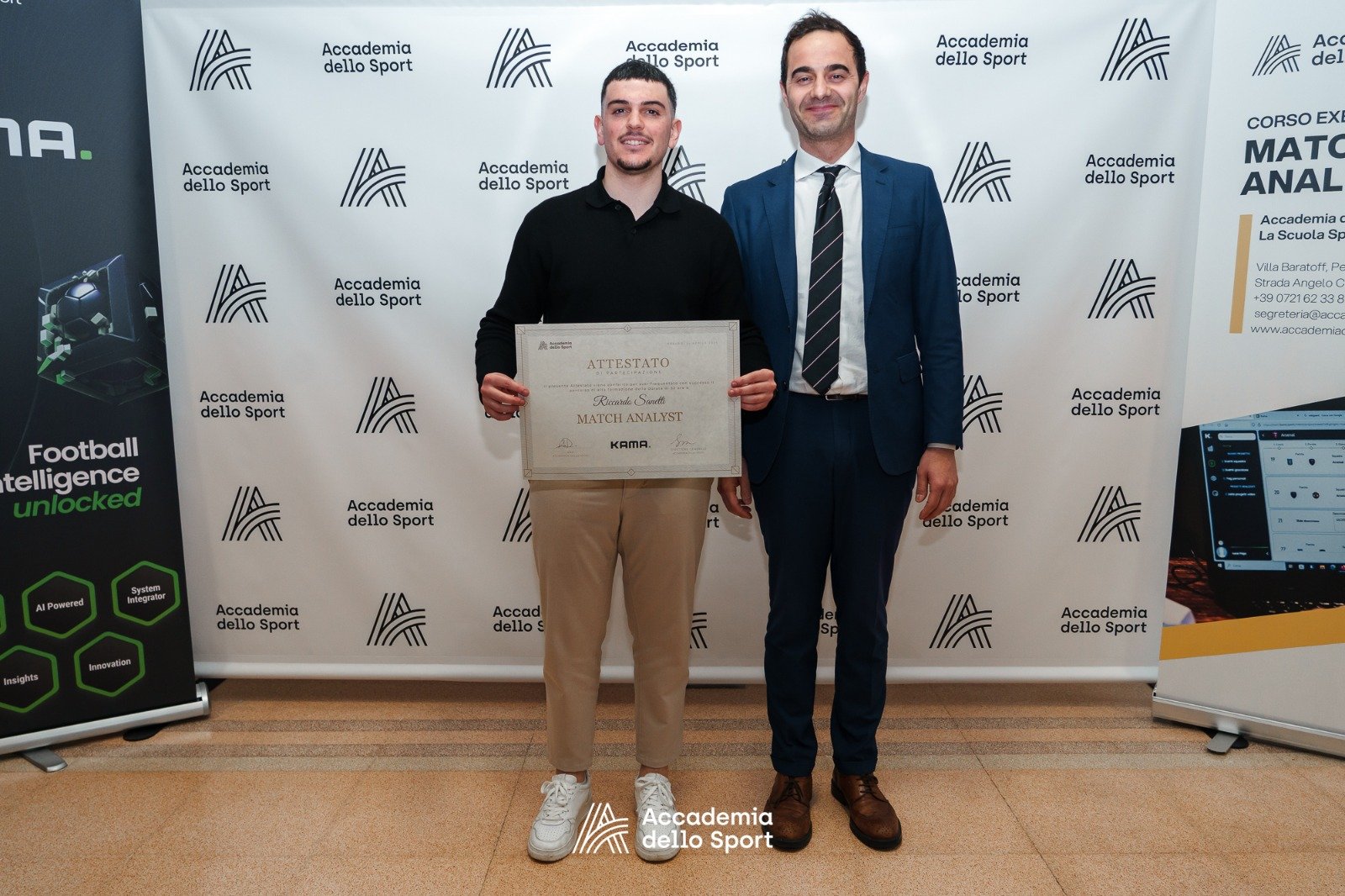
Becoming a match analyst means entering one of the most innovative, technical and sought-after professions in contemporary football. Over the past ten years, the role of the analyst has moved from being a support figure to a central element in any football club, from professional first teams to youth sectors. Today, the study of data, footage and game dynamics is a fundamental part of every team's preparation.The match analyst is the professional who analyses matches, studies the tactical behaviour of teams and opponents, interprets data and provides the technical staff with strategic information. It is a job that requires an eye for detail, method, precision, tactical knowledge and strong technological competency. It is not simply a matter of watching matches — it means knowing how to read them in depth, break them down, interpret them and transform them into concrete solutions for improving the team's performance.In this comprehensive guide you will discover who the match analyst is, what they do, what competencies are required and how to become one through a serious, recognised professional
match analyst course
.
Who the Match Analyst Is in Football
The match analyst is a member of the technical staff tasked with studying matches and producing analyses that are useful to the coach and the team. They are a professional who works "behind the scenes", but who has a direct impact on tactics, preparation, strategy and performance.Their function has become indispensable because modern football is increasingly complex: teams prepare in a scientific way, opponents constantly change their formations and principles, and the level of competition is extremely high. In this context, figures are needed who can analyse, interpret and explain what happens on the pitch in an objective and immediate way.The match analyst combines tactics, technology and the ability to synthesise — three decisive elements for turning information into competitive advantage.
What a Match Analyst Actually Does
The analyst's work is broad and varied. Their activity is divided into three macro-areas: analysis of their own team, study of opponents and advanced video analysis.The main responsibilities include:
-
analysing their team's matches, identifying strengths and weaknesses
-
studying opponents and preparing reports for the technical staff
-
extracting, clipping and cataloguing actions using professional software
-
interpreting data and advanced metrics to support tactical decisions
-
preparing video presentations for meetings with players and coaches
-
collaborating with the fitness coach and head coach to combine physical and tactical data
-
monitoring the team's performance throughout the season
It is a role that requires deep concentration, method and the ability to simplify complex concepts. The analyst must be able to transform hours of video and hundreds of data points into clear, useful and immediately applicable information.
Match Analyst and Scout: The Differences
Many people confuse the match analyst with the
football scout
, but they are two different roles.
-
The match analyst studies their own team and opponents to prepare for matches and improve internal performance.
-
The scout focuses on evaluating players, potential transfer targets and profiles to add to the squad.
The former almost always works within a technical staff; the latter more often operates in service of sporting directors for market decisions.
Essential Competencies to Become a Match Analyst
To do this job, technical, tactical and digital competencies are required.
Tactical Competencies
The non-negotiable foundation is a knowledge of football from a tactical standpoint:
-
playing systems and their variants
-
offensive and defensive tactical principles
-
transitions and unit behaviours
-
reading collective movements
-
interpreting the phases of a match
A match analyst must be able to observe football at a deeper level than the average spectator.
Technological Competencies
The role requires familiarity with the main sector software, including:
-
Wyscout
-
InStat
-
Hudl
-
LongoMatch
-
KlipDraw
These tools allow you to clip actions, create playlists, analyse tactical sequences and prepare personalised presentations.
Analytical Competencies
Modern analysts also work with advanced data, such as:
-
xG (expected goals)
-
xA (expected assists)
-
physical and athletic metrics
-
individual and collective KPIs
The match analyst must know how to read numbers and connect them to the tactical context and actual performance.
Communication Competencies
Analysis is useless if it is not communicated well. What is needed:
-
conciseness
-
clarity
-
ability to present complex content
-
organised reports
The match analyst works every day with coaches and players: they must be comprehensible and direct.
Requirements to Become a Match Analyst
There are no formal obligations, but there are recommended pathways.Among the most useful qualifications:
-
degree in sports science
-
degree in statistics or data analysis
-
masters and specific courses in match analysis
-
FIGC federal courses
Having a sporting or analytical background facilitates understanding of game dynamics and advanced data.
The Training Pathway to Become a Match Analyst
To become a match analyst it is not enough to know tactics or know how to use software — a structured pathway is needed that combines study, practical application and engagement with industry professionals. Modern football requires figures who can analyse footage, data and game situations with scientific method, transforming every observation into useful information for the technical staff.For this reason, training must be advanced, up to date and above all practical, so that the candidate truly acquires the operational competencies needed to work at a club.An effective pathway includes hours dedicated to tactical reading, real exercises on professional software, case studies drawn from elite football and constant support from qualified instructors. It is fundamental that training is not purely theoretical: the aspiring analyst must learn to segment actions, recognise recurring patterns, compile professional reports, prepare video meetings and collaborate with the coach and technical staff in a concrete way.This is the context in which the
Match Analyst Course
by Accademia dello Sport
sits — one of the most comprehensive training programmes in Italy. The course includes
52 hours of online lessons
via live streaming, also available on demand, with a
final in-person day
and the opportunity to take part in an
Experience at a Professional Club
, to observe the work of Serie A and Serie B analysts up close.The programme is run by
Professional Instructors
who are actively working at Italian clubs, offering real methodologies, tools and case studies. At the end, participants can access a
placement at a sports club
, gaining a concrete first foothold in the world of football.
Professional Courses
On the market there are private courses and federal pathways that offer:
-
study of modern tactical structures
-
video analysis methodology
-
practical use of the main software
-
action classification and segmentation techniques
-
preparation of professional reports
They are ideal for those who want concrete, immediately applicable skills.
Practical Experience
Practice is fundamental. Every aspiring analyst should:
-
clip and analyse matches for local coaches
-
create a personal portfolio with analyses and videos
-
collaborate with amateur teams
-
take part in training placements to gain on-the-ground experience
The initial groundwork allows for rapid improvement and entry into the sector.
How Work Is Done Inside a Club
The match analyst is part of the technical staff. They work in close contact with:
-
the head coach
-
the fitness coach
-
technical collaborators
-
youth sector analysts
During the season they carry out daily activities:
-
analysis of played matches
-
detailed study of opponents
-
preparation of video meetings
-
staff support with data and footage
-
monitoring of individual and collective improvements
It is a job defined by precision, continuous study and the ability to adapt to the rhythm of the season.
How Much Does a Match Analyst Earn
Salaries vary depending on the level.
-
Amateur: €3,000 – €8,000 per year
-
Professional youth sectors: €12,000 – €20,000 per year
-
Serie C/B: €20,000 – €40,000 per year
-
Serie A: €40,000 – €80,000 per year
At top European clubs, salaries can exceed €100,000 per year.
How Accademia dello Sport Prepares You
Accademia dello Sport offers a dedicated programme for those who want to become a match analyst, with technical modules, practical exercises and use of the main professional software.The course includes:
-
study of modern tactics
-
advanced video analysis methods
-
use of professional software
-
writing real reports
-
exercises guided by professional analysts
It is training designed to be operational and immediately applicable in the world of football.
A Modern, Technical and Opportunity-Rich Profession
The match analyst is a continuously growing figure in modern football.It combines sport, technology, strategy and analytical capacity — skills that are increasingly in demand at clubs.It is an ideal profession for those who love studying the game, want to work within a technical staff and desire a role that unites intuition with scientific method.With a serious training pathway, plenty of practice and use of professional software, building a career as a match analyst is more achievable today than ever before.