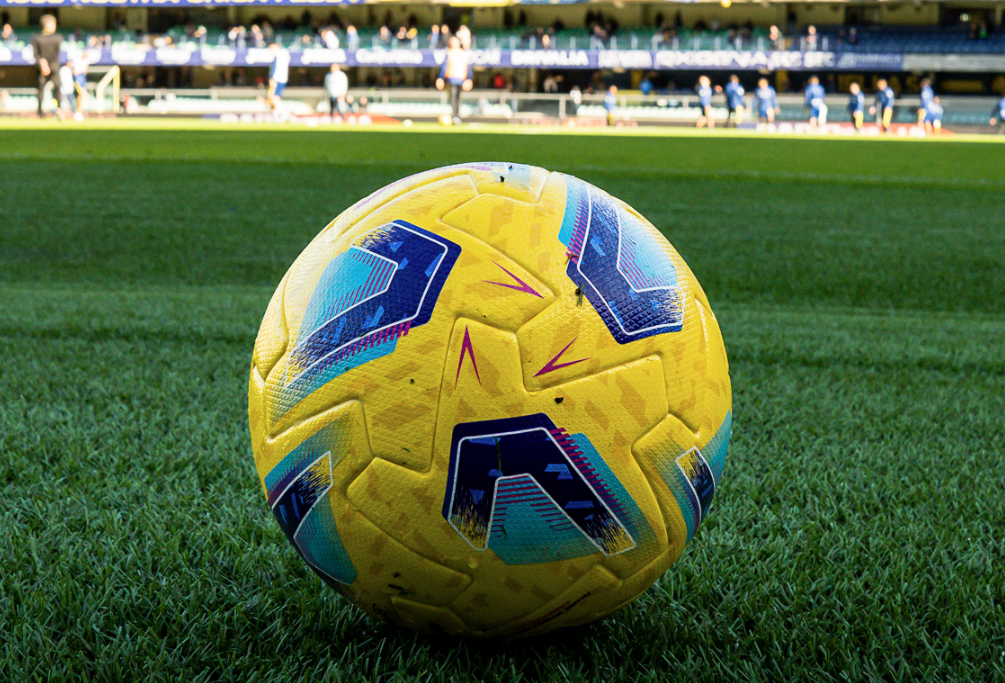
Football — the real kind — does not live in sterile comparisons but in nuance. Those who truly inhabit it, who spend time on secondary pitches as well as in stadiums, know that talking about women's and men's football means observing two expressions of the same language, born however in different contexts. The point is not to establish hierarchies, but to understand why certain dynamics exist, how they were formed and what they tell us today about the footballing world — particularly Italian football, which is going through a period of profound transformation.
Structural Similarities: The Game Is the Same
The starting point is simple. The rules don't change. An offside is an offside, whether in the women's Serie A or the men's Serie B. The pitch has the same dimensions, the ball is the same, and team dynamics follow the same tactical logic.Pressing, cover, width, reading transitions — all of this belongs to the same footballing vocabulary.Anyone who watches a women's Coppa Italia match with genuine attention immediately recognises the same principles they see on a Sunday in a men's stadium. The pace changes, the average physical intensity changes, but the intelligence of the game does not. The players read space, anticipate, make mistakes and correct them in exactly the same way as their male counterparts.The difference, when it exists, is not conceptual — it is executive. And this distinction is fundamental in order not to fall into superficial judgements.
Physical Differences and Their Real Impact
Physical differences between men and women exist and have an effect. It would be naive to deny it. In men's football, peak speed and physical strength in challenges are on average higher, while in women's football the game tends to develop at a slightly more readable pace, with fewer violent collisions and greater continuity in play.This does not mean lower intensity, however — it means a different intensity. Often more evenly distributed, less explosive, but no less demanding. Those who have coached both sides know that real fatigue arrives in the same way.In fact, this different physical structure tends to place greater value on aspects such as positioning, technical cleanliness and ball management — elements that make women's football extremely instructive for those who coach or study the game.
The Weight of History in Italian Football
One of the greatest gaps between women's and men's football is not measured on the pitch but in time. Italian men's football has had decades of continuity, investment and structured youth sectors. Women's football has not. For years it remained on the margins, sustained more by passion than by any real system.This has had direct consequences: fewer training hours from childhood, fewer high-level competitions, fewer opportunities to build a complete pathway. And yet, despite this, women's Serie A today shows clear growth, as does Serie B, which represents an increasingly important pool for the development of the game.When looking at serious results, it is essential to take this context into account. These are not two worlds that have grown in the same way — they are two histories that have only recently begun to converge.
International Competitions and Visibility
The qualitative leap in women's football also passes through international competitions. The women's Champions League has played an enormous role in showing what this sport can become when there is continuity, structure and vision. Teams that compete regularly at this level develop an intensity and quality that significantly reduces perceived differences.The same applies to the women's national team, which in recent years has regained attention and respect, also thanks to competitions such as the UEFA Nations League and participation in global events. The Olympic Games, in this sense, represent one of the clearest stages for understanding how women's football has become a worldwide phenomenon — no longer a marginal one.An interesting fact emerges here. The higher the competitive context, the more the differences between men's and women's football narrow in terms of reading the game and the quality of decision-making.
Emotional Aspects and Group Dynamics
Another real difference concerns relationship management. In women's football, emotional dynamics are often more visible, more openly expressed. Conflicts surface sooner, but are also confronted sooner. This can make the group more fragile at certain moments, but also more cohesive over the long term.In men's football, many tensions remain submerged — played out through silence and unspoken hierarchies. Two different ways of experiencing the dressing room, both complex, and neither automatically better.For coaches and directors, understanding this aspect is crucial. You cannot manage a women's team as though it were a copy of a men's one, and vice versa.
Common Mistakes in the Comparison
When talking about women's and men's football, the same errors keep recurring:
-
Comparing different competitive levels
-
Using only physical parameters
-
Ignoring the historical context
-
Reading results without depth
These mistakes do not help in understanding the game — they simplify it to the point of emptying it of meaning.
Where Football Is Heading Today
The future of football lies in the integration of differences, not in their erasure. Women's football does not need to imitate men's football in order to be legitimate. It needs to continue growing within its own identity, supported by structures, training and vision.In Italian football this journey has begun. It is still imperfect, at times slow, but real. Those who love football — the real kind — would do well to observe it without prejudice, letting the pitch do the talking.Because in the end, whether it is the women's Serie A, Serie B, Coppa Italia or Champions League, what makes football recognisable is always the same thing: the capacity to make the right choice, at the right moment, under pressure. And that has no gender.
Discover the Training Programs of Accademia dello Sport
Professional Master's programs in Football Management, Basketball Management and Match Analysis with top-level instructors and direct experiences at professional clubs.